


Motorhome Break-ins in Sweden: What Campers Need to Know
For many motorhome travellers, Sweden is one of the most attractive destinations in Europe: plenty of nature, good infrastructure, spacious stopover sites and a generally relaxed travel experience. Even so, campers should not completely overlook the subject of security. In recent months, there have been several reports of break-ins involving motorhomes and caravans, in some cases while the owners were asleep inside.
This article summarises what is known, where the incidents have been reported, how the offenders appear to operate and which simple measures can help reduce the risk.
What happened in Sweden?
The German Federal Foreign Office explicitly states in its current travel and security advice for Sweden that vehicle break-ins and robberies involving caravan and motorhome owners can also occur at official campsites. Travellers are advised, among other things, to use guarded campsites, store important documents securely, prefer cashless payments and use additional locking devices in the motorhome while sleeping. Source: German Federal Foreign Office
The Swedish police also reported a series of break-ins involving motorhomes in western Sweden. Five men were convicted in connection with such offences. According to the police, the offenders struck while the victims, often foreign tourists, were asleep inside their vehicles. The investigation covered nearly 30 cases. Source: Polisen.se
It is important to keep this in perspective: Sweden has not suddenly become a “dangerous country to visit”. However, there is a genuine risk that can be relevant on popular travel routes, at campsites, motorhome stopovers and roadside rest areas.
Where did the break-ins occur?
Several reports refer to western Sweden, particularly the regions of Västra Götaland and Halland. The locations mentioned included campsites, motorhome stopovers and rest areas. Swedish broadcaster SVT reported that the wave of break-ins during the summer of 2025 led the police to increase their presence at campsites in western Sweden. Source: SVT
Warnings have also previously been issued about break-ins involving motorhomes along major routes such as the E6. In 2023, SVT Halland reported on a wave of thefts targeting tourists along the E6. The police compared such motorhome break-ins to residential burglaries because people are sleeping inside the vehicle. Source: SVT Halland
This is relevant for motorhome travellers because many journeys through Sweden follow exactly these transit routes: arrival by ferry, onward travel towards Gothenburg, the west coast, Norway or further north. After a long day of driving, it can be tempting to stop spontaneously at a rest area or a poorly monitored overnight location.
How do the offenders appear to operate?
According to Swedish media reports and police statements, several incidents followed a similar pattern. The offenders arrived at night or in the early morning while the owners were asleep inside the vehicle. Sveriges Radio reported that, in several cases, the offenders appear to have gained access through the driver’s door. According to police spokesperson Jens Andersson, investigators identified a recurring method: the offenders drilled through the driver’s door while the owners were sleeping. Source: Sveriges Radio
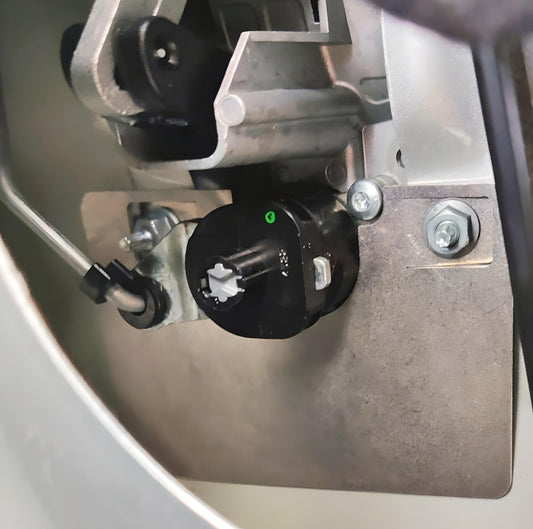
Author’s note: This described method closely resembles what is commonly known as the Prick method on many Fiat Ducato, Peugeot Boxer and Citroën Jumper vehicles. In this type of attack, the area around the driver’s door is deliberately manipulated in order to unlock the door. The police naturally do not publish every technical detail of the method. What matters for campers is that the driver’s door is a particularly relevant weak point on many vehicles.
These offences do not appear to focus primarily on stealing the entire vehicle, but rather on gaining quick access to valuables inside: wallets, cash, bank cards, smartphones, cameras, bags or documents. When the owners are asleep, every second matters to the offenders. The faster they can enter and leave the vehicle, the lower the risk from their point of view.
Why are motorhomes targeted?
Motorhomes are attractive targets for several reasons. They are often parked overnight in easily identifiable locations, are clearly recognisable as travel vehicles and usually contain personal belongings. Foreign travellers in particular often carry passports, bank cards, cash, cameras, smartphones and other valuables.
Another factor is that many motorhomes are based on the same base vehicles. The Fiat Ducato, Peugeot Boxer and Citroën Jumper are widely used and share similar body structures, doors and locking systems. Once offenders become familiar with a weak point, they may be able to apply that knowledge to many different vehicles.
This does not mean that every motorhome in Sweden is at risk. However, the combination of travel route, overnight location, vehicle type and visible valuables can increase the likelihood of a break-in.
What can campers do in practice?
The most important recommendation is simple: do not panic, but travel prepared. Many useful precautions cost little or nothing and can significantly reduce the risk.
1. Choose your overnight location carefully
Where possible, choose well-lit, busy or guarded locations. The German Federal Foreign Office explicitly recommends using guarded campsites. Particular caution is advisable at isolated rest areas, remote parking bays and poorly visible overnight stops along major transit routes.
This does not mean that informal motorhome stopovers are automatically unsafe. However, anyone arriving late and tired should briefly consider: Is the location well lit? Are other vehicles nearby? Are there easy escape routes for offenders? Is the site clearly visible from the surrounding area?
2. Do not leave valuables within easy reach
Many motorhome break-ins are quick access crimes. Wallets, bank cards, passports, smartphones, cameras and bags should therefore not be left visible in the cab. It is even better to avoid storing important belongings directly next to the driver’s or passenger door.
Even when sleeping inside the vehicle, documents, cash and cards should ideally be stored separately. Keeping everything in one bag beside the driver’s seat makes things unnecessarily easy for offenders.
3. Reduce the amount of cash and separate important documents
The German Federal Foreign Office recommends using cashless payments in Sweden and storing documents securely. Card payments are extremely common in Scandinavia, so there is usually no need to carry large amounts of cash in the vehicle.
It is also advisable to keep digital copies of important documents and not store all original documents, bank cards and cash in the same place.
4. Add extra protection to the cab and driver’s door
If offenders are specifically targeting the driver’s door, this area deserves particular attention. Additional mechanical security can make entry more difficult or at least slow it down considerably. The aim is not to make a vehicle completely “impenetrable”. What matters is making fast and quiet access more difficult.
Depending on the vehicle and how it is used, different solutions may be suitable: additional cab door locks, mechanical cab security devices, supplementary locking systems or protective plates around the known weak point in the driver’s door. Protection of the driver’s door is particularly relevant for the Fiat Ducato, Peugeot Boxer and Citroën Jumper because many motorhomes are built on these base vehicles.
Examples of such mechanical security include a protective plate around the known Prick-method weak point, a universal locking bar for the cab or additional cab door locks. The security solution should always suit the vehicle, the travel habits and the type of overnight stays.
5. Do not forget the rear door or habitation door
On campervans, the rear doors may also be relevant in addition to the driver’s door. On coachbuilt and overcab motorhomes, the habitation door is another important access point. A sensible security concept therefore considers all realistic entry points rather than focusing on just one door.
Campers who frequently stay off-grid or take longer trips should consider whether additional locks or mechanical security devices are appropriate for particularly vulnerable doors. The most elaborate solution is not always necessary. Even simple mechanical barriers can make a difference when offenders want to act quickly and quietly.
6. Pay attention to suspicious behaviour
Sveriges Radio reported that the police had advised motorhome owners to watch out for unknown people near their vehicles. This is particularly relevant when arriving, at campsites, at rest areas and during the evening.
Suspicious behaviour may include people walking between motorhomes without an obvious reason, watching vehicles or showing unusual interest in doors, locks or bags visible inside. In such cases, it is better to inform the site operator or, where there is a specific concern, the police.
7. Use alarms, lighting and social awareness
Alarm systems, motion sensors, interior monitoring and lighting can be useful, but they do not replace mechanical security. An alarm may disturb or deter offenders, but it does not automatically prevent the initial entry. A combination of awareness, a sensible overnight location, reduced access to valuables and mechanical security is usually more effective.
Contact with neighbouring campers can also help. People who have briefly spoken to one another are more likely to notice unusual noises or unfamiliar people around a vehicle.
Which security measures are useful?
There is no single solution that is suitable for every motorhome. In most cases, a combination of sensible behaviour and mechanical security is the best approach. For many vehicles based on the Fiat Ducato, Peugeot Boxer and Citroën Jumper, the following areas are particularly relevant:
- protect the driver’s door against manipulation from outside
- add an extra locking system to the cab at night
- secure the rear door or habitation door depending on the vehicle type
- keep valuables out of sight and out of easy reach
- prefer guarded or clearly visible overnight locations
- use an alarm system or motion sensor as an additional layer of security
Suitable product types include a protective plate for the driver’s door, a mechanical cab locking device or additional cab door locks for the Ducato Series 8. These products cannot guarantee protection against break-ins, but they can make quick access more difficult and increase the effort required by offenders.
Frequently asked questions about motorhome break-ins in Sweden
Is Sweden still safe for motorhome travellers?
Yes. Sweden remains a popular and generally easy country to travel through by motorhome. However, the recent reports show that break-ins involving motorhomes can occur there as well, particularly on common travel routes, at rest areas, motorhome stopovers and sometimes even at campsites.
Where do motorhome break-ins in Sweden occur most often?
Several reports refer to western Sweden, including Västra Götaland and Halland. Campsites, motorhome stopovers, rest areas and major routes such as the E6 have been mentioned. Transit routes and overnight locations after long driving days are particularly relevant for travellers.
How do offenders get into the motorhome?
In several reported cases, the offenders appear to have targeted the driver’s door at night or in the early morning while the owners were asleep inside. Swedish media reported a method involving deliberate manipulation or drilling of the driver’s door.
What is the Prick method on a motorhome?
The Prick method is a known break-in technique affecting many motorhomes based on the Fiat Ducato, Peugeot Boxer and Citroën Jumper. It involves manipulating the area around the driver’s door in order to unlock it. The exact method should not be described publicly in unnecessary technical detail.
Which measures help protect against motorhome break-ins while travelling?
A combination of careful overnight location selection, keeping valuables out of sight, storing documents separately and using additional mechanical security is advisable. The driver’s door, the cab and, depending on the vehicle type, the rear door and habitation door are particularly important.
Sources and further information
- German Federal Foreign Office: Travel and security advice for Sweden
- Swedish Police: Convictions following a series of motorhome break-ins in western Sweden
- Sveriges Radio: Våg av husbilsinbrott – tjuvarna borrar sig in
- Sveriges Radio: Flera husbilsinbrott i Västsverige – polisen varnar campare
- SVT: Five men convicted over a series of break-ins in western Sweden
- SVT Halland: Police warn of a wave of thefts along the E6

