

The Prick Attack on the Fiat Ducato – Silent Break-In Method and How to Protect Yourself
Introduction: Understanding break-in protection for the Fiat Ducato
The Fiat Ducato from model year 2006 onwards is one of the most widely used base vehicles for motorhomes and camper vans in Europe. This popularity, however, also makes it a preferred target for thieves. One of the most well-known and effective methods is the so-called Prick Attack, also known as the piercing method.
Using this technique, many Ducato-based vehicles can be opened within seconds, almost silently and without visible signs of forced entry. In this article, we explain how the Prick Attack works, which vehicles are affected, and how you can protect yourself effectively and sensibly.
What is the Prick Attack?
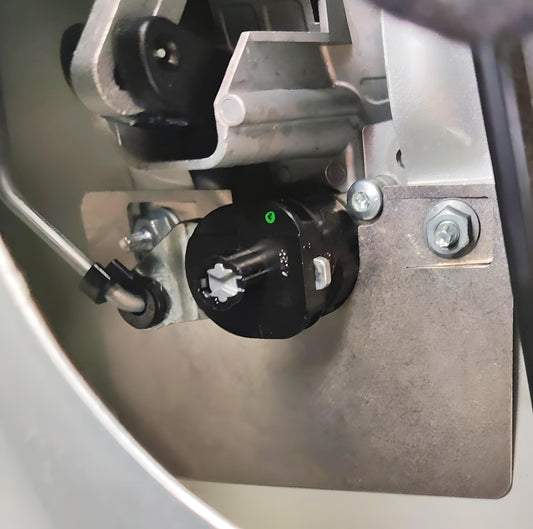
The Prick Attack is a break-in method in which the outer door skin is deliberately pierced to reach the linkage of the lock cylinder. This linkage is connected directly to the central locking system.
When the linkage is moved, the central locking system is triggered – meaning that not only the driver’s door, but all doors controlled by the central locking system are unlocked.
Typical characteristics of this method are:
- almost completely silent
- execution within seconds
- hardly any visible damage
- often not recognisable as a break-in by passers-by
Especially in car parks, camper stopovers or on the roadside, such break-ins often go unnoticed.
Which vehicles are affected by the Prick Attack?
The Prick Attack does not only affect the Fiat Ducato itself, but also structurally identical or closely related vehicles with the same or very similar door and locking design. These include in particular:
- Fiat Ducato (from model year 2006)
- Peugeot Boxer
- Citroën Jumper
- Citroën Relay (name used in some markets)
- Opel Movano from model year 2021
- Toyota Proace Max from model year 2024
Mainly affected are:
- panel vans
- semi-integrated motorhomes
Fully integrated motorhomes are not automatically affected, as door and body constructions vary depending on the manufacturer. Whether a similar weak point exists depends on the specific build.
Why is this method so effective?
The key issue is a design-related weak point: on the vehicles listed above, only the driver’s door has a lock cylinder that is connected to the central locking system via a mechanical linkage.
This linkage sits behind the outer door skin and can be reached and moved through a targeted puncture. An experienced offender only needs a solid, pointed tool, such as a screwdriver.
No excessive force and no noticeable noise are required – which is exactly what makes the Prick Attack so problematic.
Note on explaining the method
The Prick Attack is neither new nor secret. Similar techniques have been known for decades and were used on other vehicles long before the Fiat Ducato.
This method is already well established in criminal circles. The purpose of this article is therefore not to teach break-in techniques, but to inform motorhome owners objectively so they can take targeted preventive measures.
Is a Prickstop required on the passenger door of the Fiat Ducato?
This question is asked very frequently. The technically correct answer is:
No – a Prickstop is not required on the passenger door.
The reason is simple and structural: the passenger door has no lock cylinder. Therefore, there is no linkage that could trigger the central locking system. An attack based on the Prick principle would have no effect there.
The same applies to the sliding door: no Prickstop is required, as there is also no lock cylinder and no corresponding linkage that could activate the central locking system.
How can you effectively protect yourself against the Prick Attack?
The most effective protection against this method is mechanical reinforcement of the weak point at the driver’s door. The goal is to physically block access to the lock cylinder linkage.
Special protective plates have proven highly effective for this purpose. They reliably block the critical area and prevent tools from reaching the mechanism at all.
There are essentially two variants:
Protective plates for internal installation
These are installed on the inside behind the door trim and directly cover the linkage.
- invisible from the outside
- discreet, unobtrusive solution
- technically identical protection to external plates
Protective plates for external installation
These are mounted on the outside of the door and reinforce the door skin at the critical point.
- clearly visible
- strong deterrent effect
- can also cover or repair existing puncture damage
Both variants reliably prevent the Prick Attack. The difference lies not in the level of protection, but in appearance and deterrent effect: discreet integration or visibly deterrent.
The installation effort is comparable for both versions, as the inner door trim must be removed in either case. A detailed step-by-step guide is provided in the respective installation instructions.
Mechanical break-in protection as a foundation
Mechanical security solutions offer several decisive advantages:
- permanently effective
- simple construction
- independent of power or electronics
- highly cost-effective
Prickstop protective plates are available from around €15 and can be installed by the user with basic technical skills. This makes them one of the most effective and economical measures for securing a known point of attack.
Electronic systems such as alarms, sensors or GPS trackers can be useful – but they do not prevent the central locking system from being triggered if the mechanical weak point remains unprotected.
What’s next?
In a follow-up article, we will address a common question in detail: Prickstop protective plates or additional door locks such as HeoSafe – which is better?
We will explain:
- the role each system plays
- why they are not alternatives but complements
- and why, in practice, combining both methods has proven particularly effective
Conclusion
The Prick Attack is a real and widespread break-in method that specifically exploits the driver’s door of the Fiat Ducato and structurally related vehicles. The cause is the lock cylinder linkage, which allows the central locking system to be triggered.
With a suitable Prickstop protective plate, this weak point can be reliably secured – simply, permanently and cost-effectively.